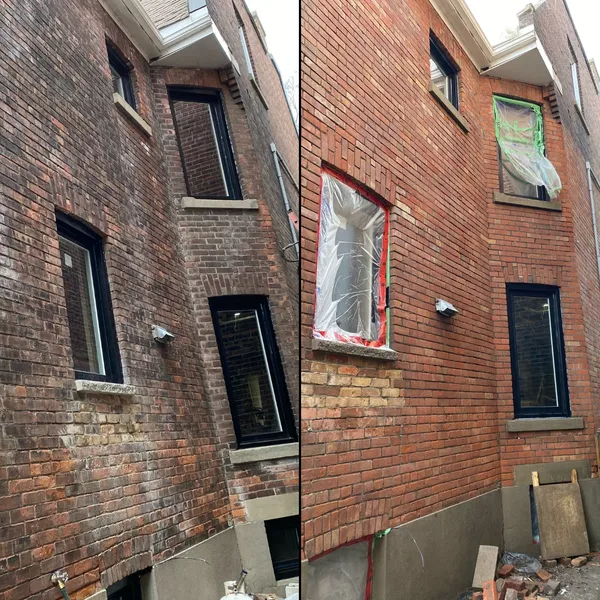
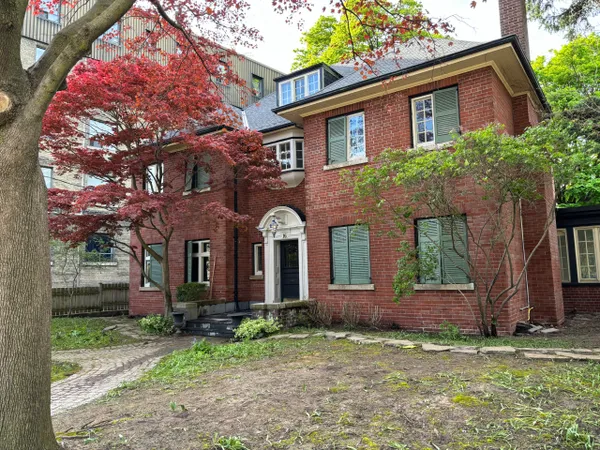
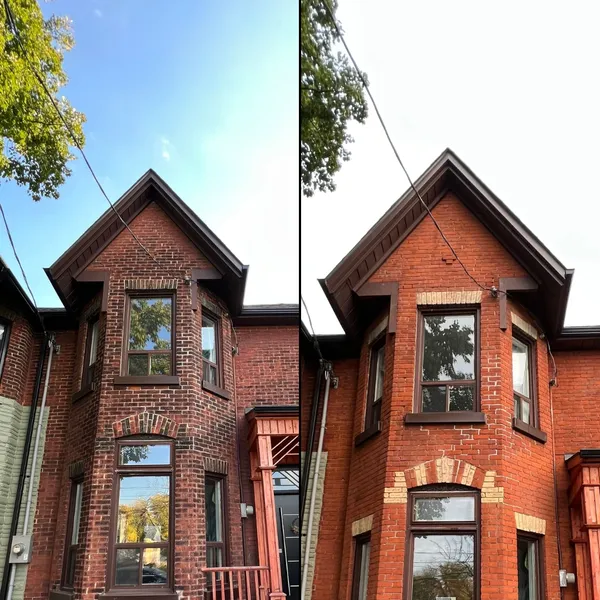
Historic brick cleaning removes black staining (hydrocarbons), as shown in the brickwork photos.
Canada has a document called The Canadian Historic Places that outlines standards and guidelines for historic conservation work across the country. At BrickWash, we adhere to these guidelines.
Bricks are not meant to appear weathered, dull, or unnaturally dark. While some bricks are intentionally black, most cases of darkened brickwork are due to hydrocarbon exterior brick staining. Historic brick cleaning aims to restore bricks to their original color while preventing further deterioration in a gentle, non-invasive way.
Hydrocarbon staining occurs when airborne pollutants accumulate on brick surfaces, gradually darkening them. This buildup not only affects the appearance but also restricts the brick’s ability to breathe, which can accelerate deterioration over time. If left untreated, these stains can make bricks look aged and worn, diminishing the overall look and longevity of the structure.
Removing hydrocarbons from brick often requires specialized detergents. Protective measures are vital to protecting your property and neighbors. Covering of windows and doors, foliage etc are all steps we take to ensure a safe and clean brick cleaning experience.
Historic brick demands additional care. High-pressure washing or abrasive methods like sand or soda blasting should never be used to clean historic or standard bricks. Historic bricks should only be cleaned using low pressure and specialized detergent, applied by a trained professional to prevent damage.
At Brickwash we use detergent-assisted low-pressure steam. Steam cleaning brick allows us to reduce water pressure and clean exterior brick stain and paint with a higher level of effectiveness and reduced risk. Our historic brick cleaning methods are in line with Canadian Conservation Standards and Guidelines
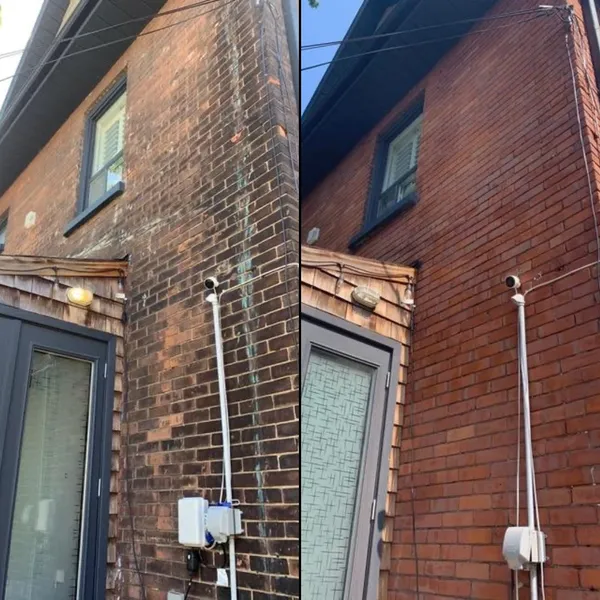
We cover all windows, doors, shrubbery, and metallic objects. For specialty cases like cleaning around copper or brass, we follow a specific preparation protocol to reduce the risk of damage.
All cleaning is performed using low-pressure steam and brick detergent. Detergent is brushed on, never sprayed. Our cleaning method follows a precise pattern to ensure exceptional results.
Our goal is to leave your property spotless and well-maintained. A proper cleanup is always conducted at the end of each job or project.
Q. What is historic brick cleaning?
A. Historic Brick Restoration Cleaning is an expert process dedicated to the meticulous removal of over a century’s worth of coal and environmental pollutants from brick surfaces. This cleaning not only mitigates the deterioration of brick but also enhances indoor air quality and visually elevates the property’s value.
Brick Wash adheres strictly to The Standards and Guidelines for the Conservation of Historic Places in Canada, which serves as Canada’s foremost heritage conservation framework, guiding all preservation efforts across the country.
Q. Why is it important to clean historic brick?
A. Cleaning historic brick not only enhances interior air quality but also safeguards against brick deterioration and elevates the overall value of the property.
Furthermore, brick cleaning serves as the primary defense in preserving Toronto’s century-old homes. A residence marred by carbon stains is ten times more likely to face demolition, losing its rich history and charm to an uninspired modern replacement. In contrast, a well-maintained, expertly cleaned brick home possesses a value that extends well beyond the land it occupies.
Q. What methods are used for cleaning historic bricks?
A. The most effective method for cleaning historic brick is through a detergent-assisted low-pressure steam cleaning process. All other cleaning techniques risk causing irreversible damage to the brick.
The detergent works to break the carbon bonds within the brick, while the low-pressure water effectively rinses away residues. The steam serves to cushion the impact of the water, facilitating the removal of additional grime and stains, including paint and mortar splatter.
Q. Can historic brick cleaning damage the bricks?
A. Proper brick cleaning is crucial, as the use of inadequate techniques can result in substantial damage, including erosion, discoloration, and loosening of the masonry. It is therefore imperative to enlist the expertise of seasoned professionals who possess a deep understanding of the unique characteristics of historic bricks.
When executed correctly, historic brick cleaning will not exacerbate any existing damage to the brick or mortar. However, any brick or mortar that has already been compromised may become more apparent during the cleaning process. It is important to note that employing methods that contravene the Standards & Guidelines for the Conservation of Historic Places in Canada can lead to irreparable damage to your brickwork.
Q. How often should historic brick be cleaned?
A. The recommended frequency for cleaning brick structures is influenced by various environmental factors, including exposure to the elements and the types of pollutants in the vicinity. Experts recommend conducting periodic evaluations of bricks, typically every few years, to assess the need for cleaning.
A comprehensive brick restoration should be performed every 80 to 100 years, depending on the structure’s proximity to highways or industrial zones. It is important to note that brick restoration is a specialized process, distinct from routine cleaning.
For instance, during the 20th century, historic brick cleaning involved removing coal soot that had accumulated over the previous century. With the shift towards more environmentally friendly energy sources, homes may now require restoration cleaning less frequently.
Q. Is using chemicals necessary for historic brick cleaning?
A. While certain cleaning methods incorporate the use of chemicals, many professionals advocate for eco-friendly and less invasive alternatives that are both effective and gentle on historical materials. It is essential to meticulously assess any chemical applications to avoid potential damage to the brick.
There is only one chemical known to effectively break the bond of carbon from brick surfaces. All other brick cleaning methods may either fail to clean the brick adequately or cause irreversible damage.
Q. What are the costs associated with historic brick cleaning?
A. The cost of cleaning brick surfaces is determined by various factors, including the size of the area, accessibility of the brick, and the presence of copper on-site, among others. Homeowners are encouraged to obtain estimates from multiple professionals to ensure competitive pricing.
It is important to note that prices for brick cleaning services are typically significantly higher than those for standard power washing. Cleaning brick is not merely a power washing service; it is a specialized historic restoration that occurs only once every 80 to 100 years and is irreversible.
Q. Will cleaning historic brick improve property value?
A. An impeccably maintained and visually appealing brick facade can substantially elevate a property’s aesthetic charm while potentially increasing its market value. Pristine brickwork acts as a favorable indicator for prospective buyers, showcasing the overall attention and care invested in the home.
The process of brick restoration cleaning typically offers a return on investment (ROI) ranging from five to ten times the cost of the restoration. In addition to enhancing the bricks’ visual impact, thorough cleaning signifies proper maintenance and accentuates other exterior enhancements.
Q. Can homeowners clean historic brick themselves?
A. It is imperative to emphasize that brick restoration cleaning should be conducted exclusively by trained professionals, such as those at Brick Wash. The process involves the use of hazardous acids and high-temperature water, particularly when working at heights exceeding 20 feet, which poses significant safety risks for individuals without proper training.
Q. Are there any long-term benefits of consistent brick maintenance?
A. Regular brick maintenance should not be confused with brick restoration cleaning. In fact, brickwork is engineered for longevity and does not require routine maintenance in the traditional sense.
However, it is essential to monitor for signs of distress, such as stress fractures, cracks, gaps in mortar, or spalling bricks. These issues should be addressed promptly upon detection. Furthermore, repointing, an essential process of replacing old mortar, may be necessary every 20 to 100 years, depending on the condition of the structure.
Q. How can one find qualified historic brick cleaning professionals?
A. To identify qualified professionals for historic brick cleaning, it is advisable to request a list of approved heritage tradespeople from local historical societies or associations.
It is important to note that being heritage approved does not necessarily correlate with exorbitantly high costs. By consulting a heritage trades list, you may discover skilled tradespeople who subcontract for larger heritage firms. In the heritage sector, significant expenses are typically linked to Certified Heritage Firms, which require the involvement of consultants, architects, and heritage permits for project oversight and documentation.
By engaging with industry experts and utilizing appropriate cleaning methods, property owners can effectively care for their historic brick buildings, ensuring their aesthetic appeal and durability for generations to come.